
Start with how the plank is built. A luxury vinyl floor combines a decorative surface with protective layers and a supporting body. The construction influences feel, installation and the details worth comparing.
What is inside a rigid-core plank?
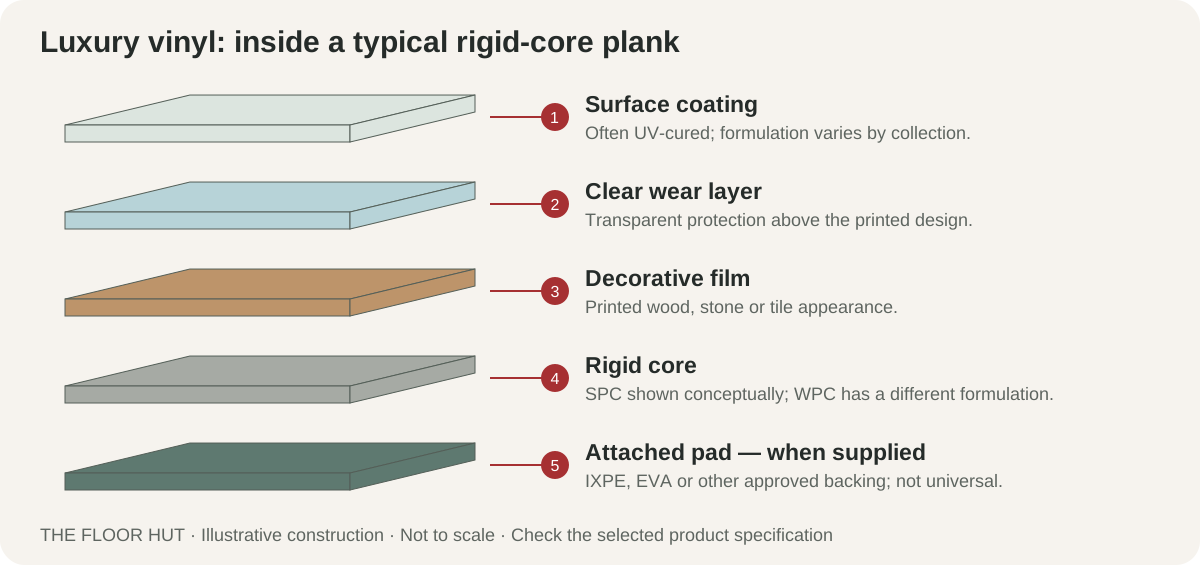
A typical surface stack has a protective coating, a clear wear layer and a printed design. Beneath it is a supporting core; an attached pad is optional. Manufacturers may combine layers or add reinforcement, so this diagram is a reading aid rather than a specification.
UV-cured coating describes how a surface finish is hardened during manufacture. It does not mean sunlight cannot change the floor. The coating and clear wear layer have different jobs; check both.
SPC, WPC and other core names
| Core term | What to understand | What to ask |
|---|---|---|
| SPC | A dense, rigid polymer-composite construction; often described as stone plastic composite or solid polymer core. | What is the exact formulation and approved application? |
| WPC | An expanded / foamed polymer-composite construction. Formulations vary, and the name does not guarantee wood content. | How does this collection feel and sound compared with the SPC sample? |
| APC / proprietary names | A manufacturer-specific label unless its technical sheet defines it. | Ask for the written core description; do not assume it means SPC or WPC. |
SPC often feels firmer; expanded WPC constructions can feel more cushioned. Compare complete planks, including their backing, rather than ranking quality by the core acronym alone.
Overall thickness and wear layer are different
Overall millimetres can include an attached pad. Wear-layer thickness concerns the clear layer above the image: 20 mil is 0.020 inch, approximately 0.51 mm, not 20 mm. Ask for the collection’s stated wear-layer thickness and total thickness separately. A thicker plank does not automatically have a thicker wear layer.
Texture and sheen
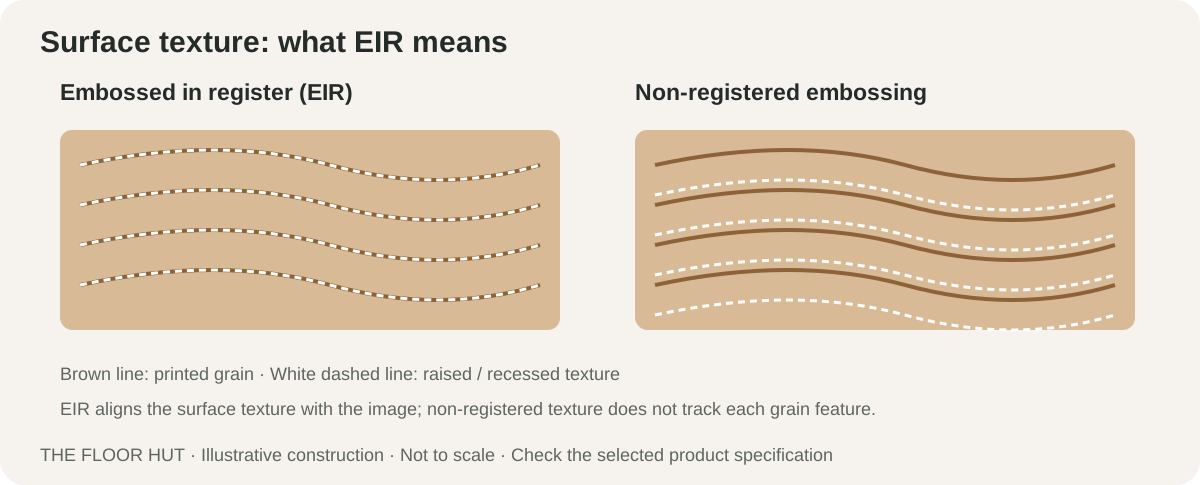
Embossed in register, or EIR, aligns texture with the printed grain. Other embossed surfaces have texture without matching every printed feature. Matte or gloss describes sheen; it does not tell you whether the surface is EIR. Compare a sample in your room’s lighting.
Edges and locking joints
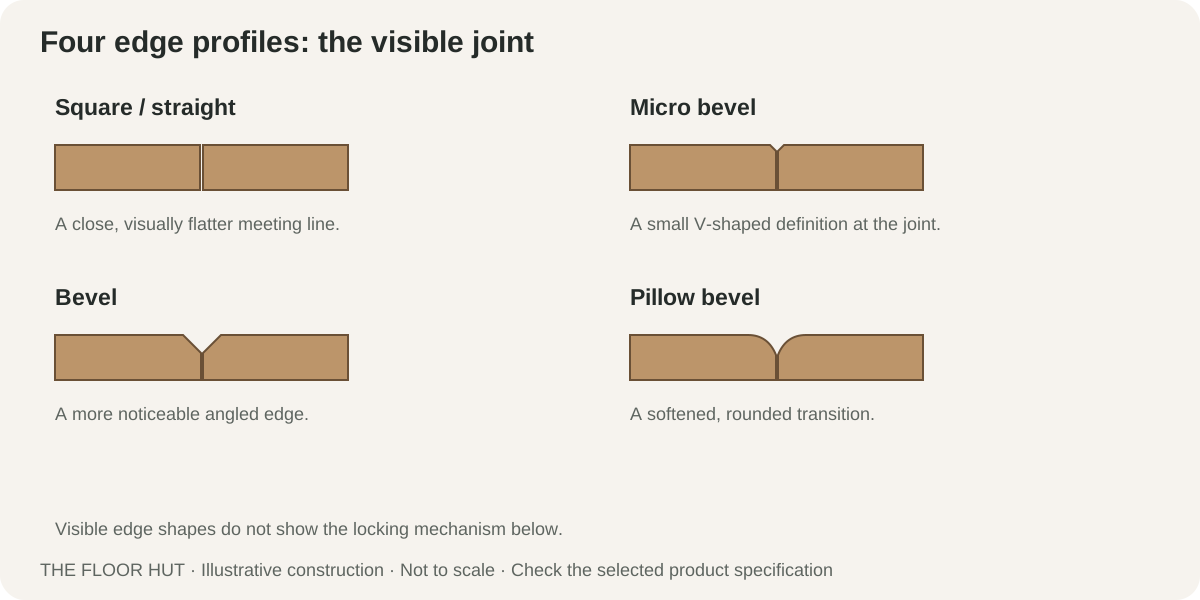
Square edges create a quieter seam; micro bevels add subtle definition. Larger bevels outline each plank, while pillow bevels soften that transition. Painted or colour-matched treatments change contrast. These are appearance choices, not a substitute for a flat subfloor.
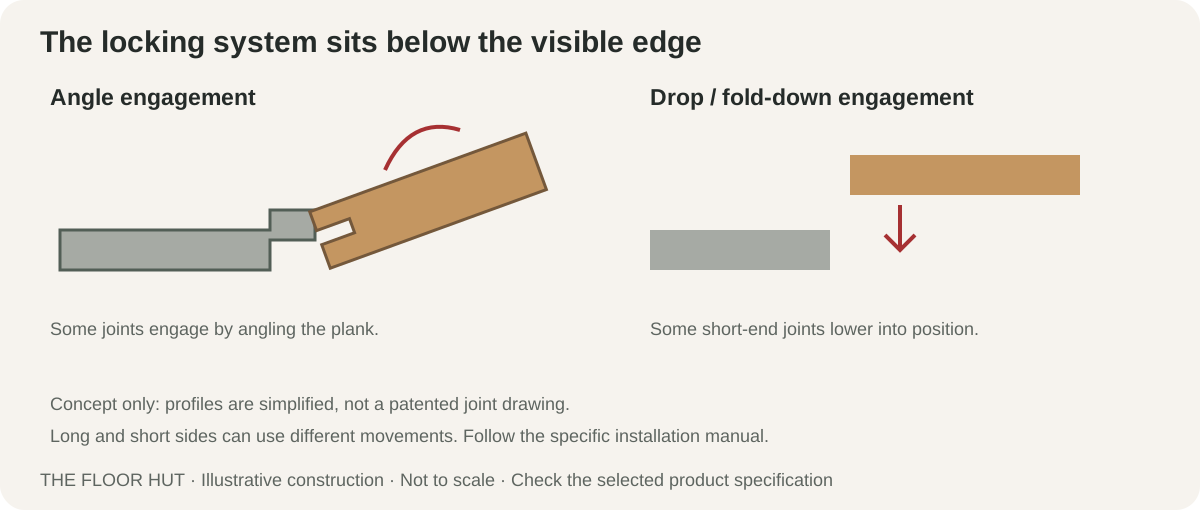
Click systems may angle together or use a drop / fold-down movement. The long and short sides can differ. Use the manual for the actual joint and never assume a similar-looking plank installs the same way.
Before choosing
- Compare core, clear wear layer, pad and total thickness as separate specifications.
- Ask about subfloor flatness, expansion gaps, sunlight and radiant-heat limits.
- Confirm whether extra underlay is allowed beneath the attached pad.
- Check the water warranty: waterproof material does not waterproof the room or subfloor.
Technical reading
- Mannington: vinyl construction types
- Unifloor: coating and wear-layer example
- Allure: visible edge styles
- Unilin: locking methods
- Quick-Step: registered embossing explained
Examples explain terminology; they do not specify every product sold by The Floor Hut.