
Laminate creates its wood or tile appearance with a printed design above a wood-fibre core. To compare collections, look beyond the colour to the surface rating, joint and stated water performance.
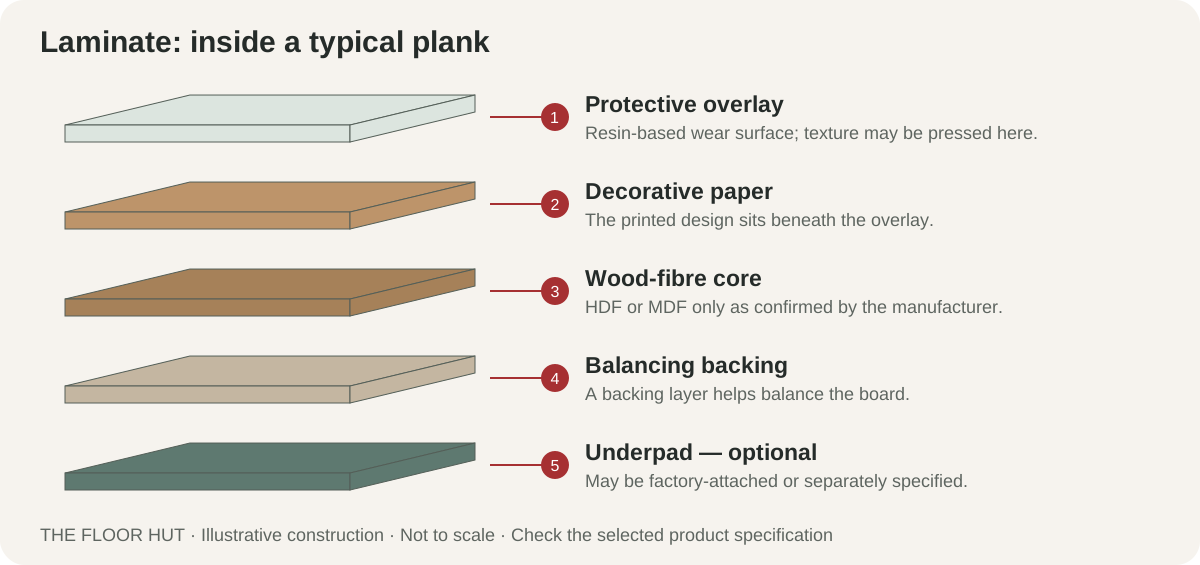
How the layers work together
A transparent resin-based overlay protects the decorative paper. The wood-fibre core supports the plank and its machined joint. A balancing backing completes the board; underpad may be separate or factory-attached. Some collections use additional treatments or layers.
MDF and HDF: confirm the actual core
MDF means medium-density fibreboard; HDF means high-density fibreboard. They describe wood-fibre board categories, not a complete flooring performance grade. Many laminate floors use HDF, but we identify a product’s core only when its manufacturer confirms it.
HDF alone does not establish water resistance. Core formulation, edge treatment, joint design and the tested system matter. A regular laminate can have HDF; a water-resistant label should come from the collection’s published specification, not our assumption about its core.
What to compare on the label
| Specification | Question to ask |
|---|---|
| Overall thickness | Does the stated thickness include the pad? |
| AC / use rating | What abrasion rating and intended use does the manufacturer declare? |
| Water resistance | What exposure is covered, for how long, and with which installation conditions? |
| Underpad | Is it attached, and is any additional layer permitted? |
| Locking system | Which assembly method and expansion details apply? |
Texture is different from sheen
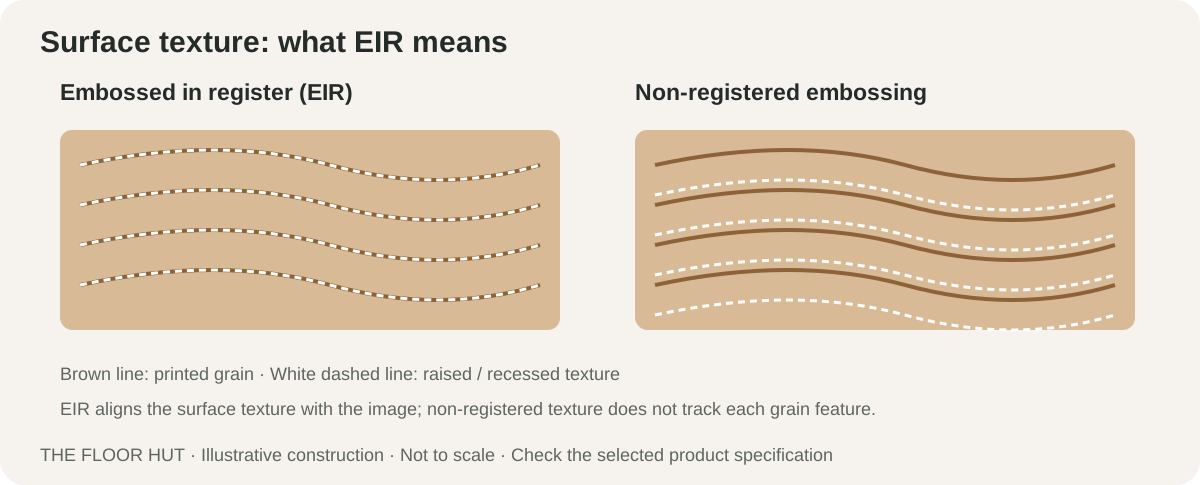
EIR texture follows the printed design. Non-registered embossing gives texture without aligning every grain feature. A matte or glossy appearance describes reflected light, so compare sheen and embossing separately.
The edge changes the room’s rhythm
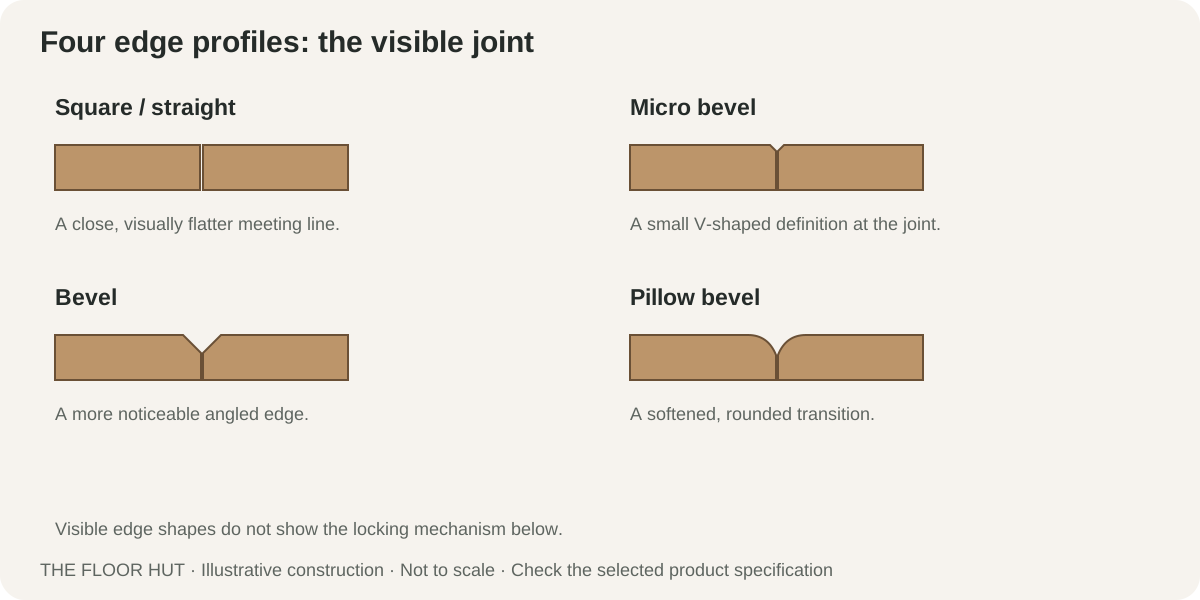
Square, micro-bevel, bevel and rounded pillow-style treatments make joints more or less visible. Names vary between collections. View joined samples rather than choosing only from one loose plank.
Make the specification fit the room
- Tell us about the room, subfloor, spill exposure and any radiant heating.
- Ask for the installation instructions and written water-warranty limits.
- Check the approved cleaning method and treatment of perimeter joints.
- Compare the complete installed price, including preparation and transitions.
Technical reading
- Quick-Step: laminate layers and EIR
- Unilin: joint assembly methods
- Allure: edge terminology illustrated on vinyl
Examples explain terminology; they do not specify every product sold by The Floor Hut.